HX72kW Industrial Electric Steam Generator 0.1 T/h 0.6 MPa | Steam Boiler for Laundry Ironing, Dry Cleaning and Food Processing
Product Details
Core Structure & Branded Components — Built from Parts You Can Name
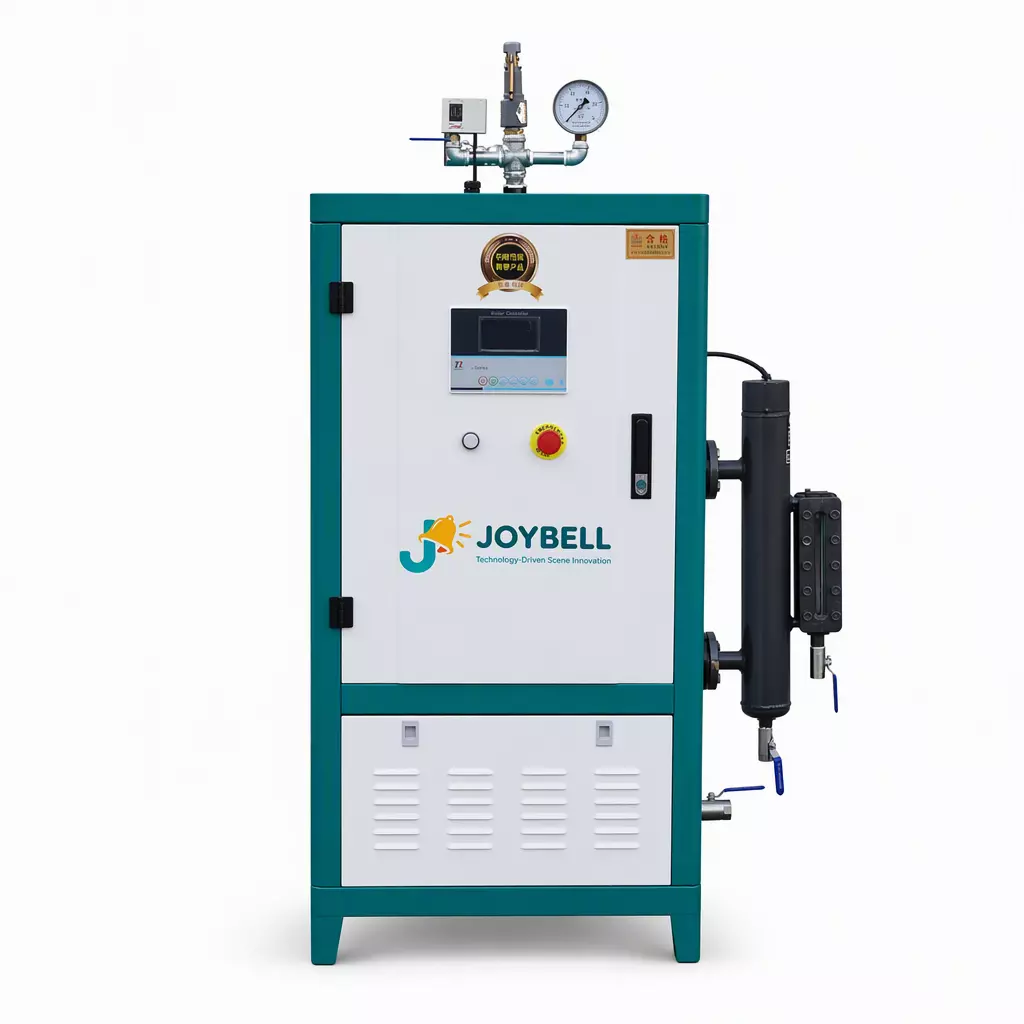
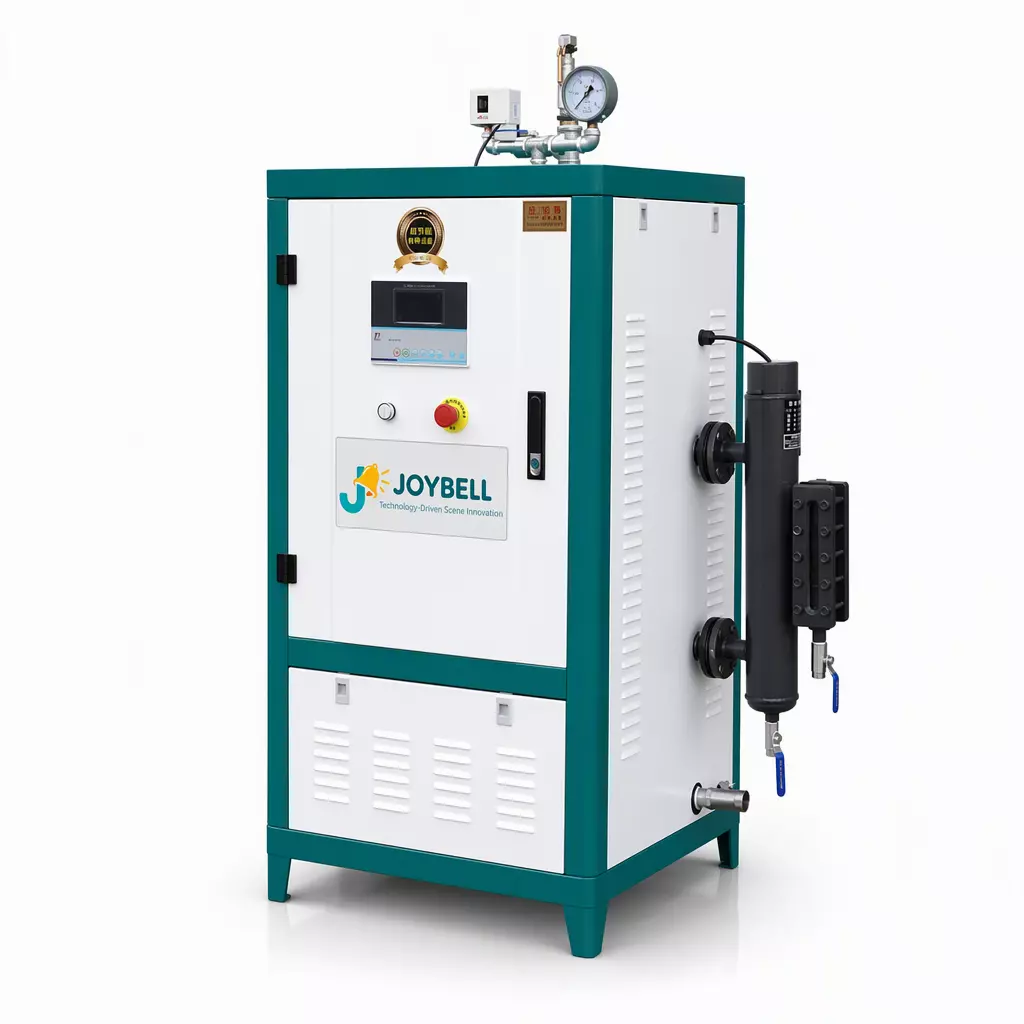
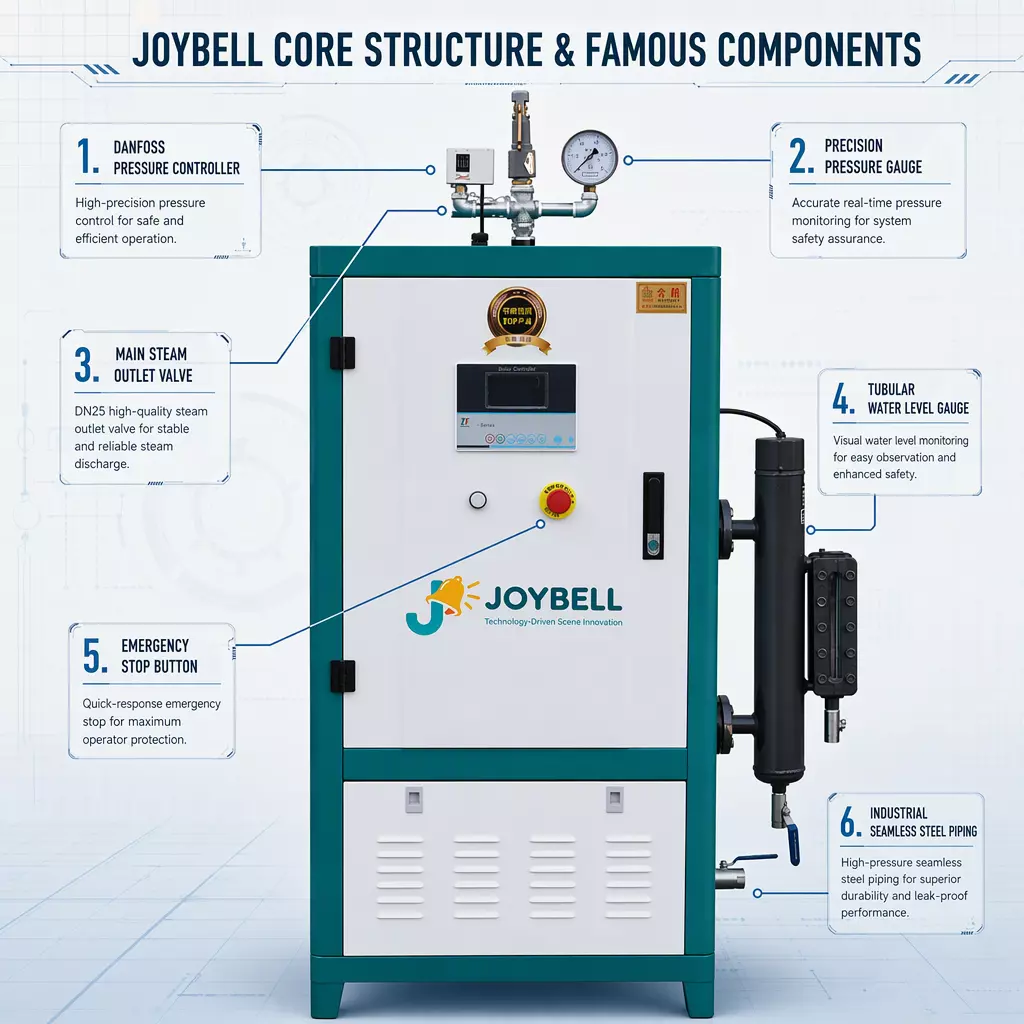
Six parts do the work, and each one is specified rather than generic. A Danfoss pressure controller handles high-precision cut-in and cut-out, so pressure stays where it should instead of drifting. A precision pressure gauge gives real-time readout at the unit. The DN25 main steam outlet valve discharges steadily. A tubular water level gauge lets the operator see the level directly rather than trust a sensor. The emergency stop button sits within reach on the front panel. And all high-pressure piping is industrial seamless steel, which is what keeps joints leak-free and the unit durable in daily service.
Where the Electricity Actually Goes — ≥98% Efficiency, 36-72 kW/h Flexible
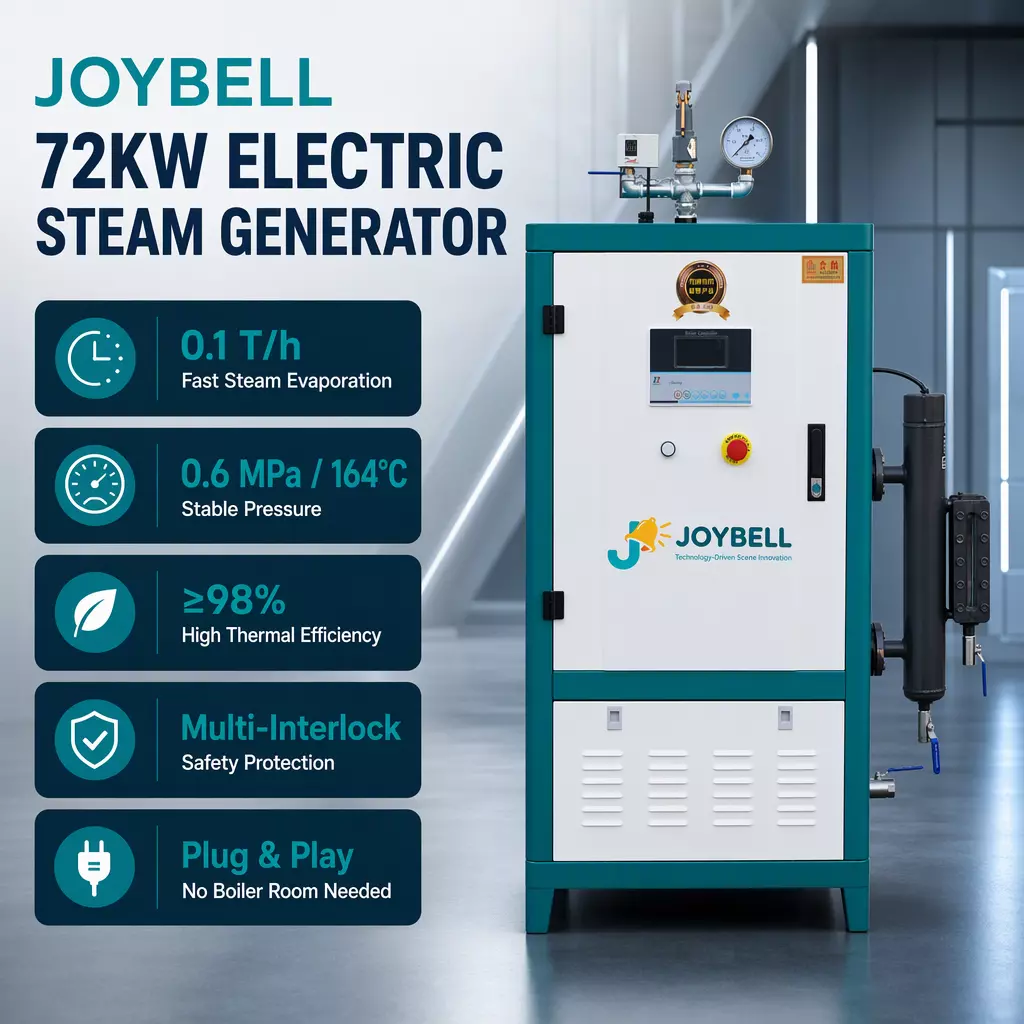
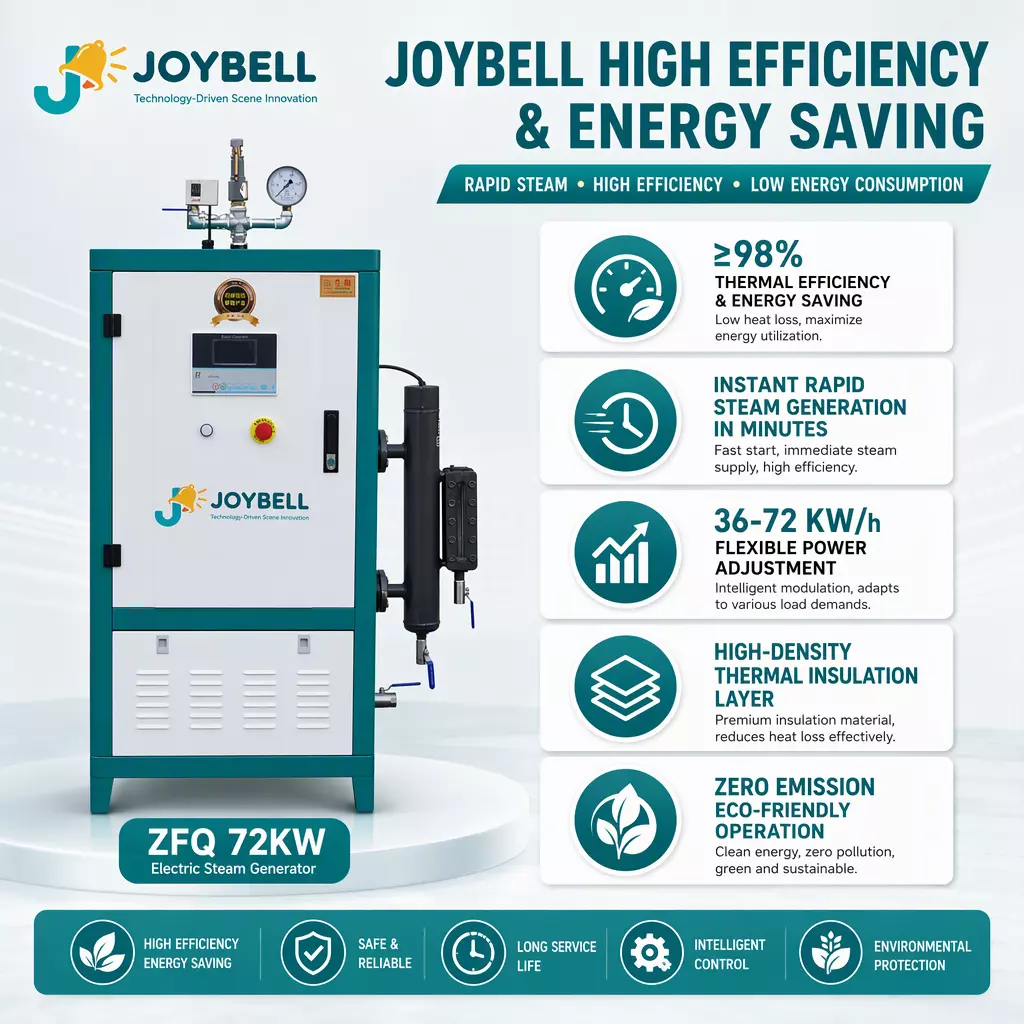
Thermal efficiency of 98% or higher means almost every kilowatt you pay for ends up in the water, not up a flue. A high-density insulation layer keeps that heat inside the shell instead of radiating it into the room, which is what makes the saving real on a unit that cycles on and off all day. Steam is available in 8-15 minutes from cold start, and power modulates flexibly from 36 to 72 kW/h — so a single washer or a short line can run at partial load instead of forcing the generator to idle at full power. Because the heat source is electricity, there is no flue, no fuel storage and no emissions at the point of use.
Three Independent Protections — and No Boiler Room to Build
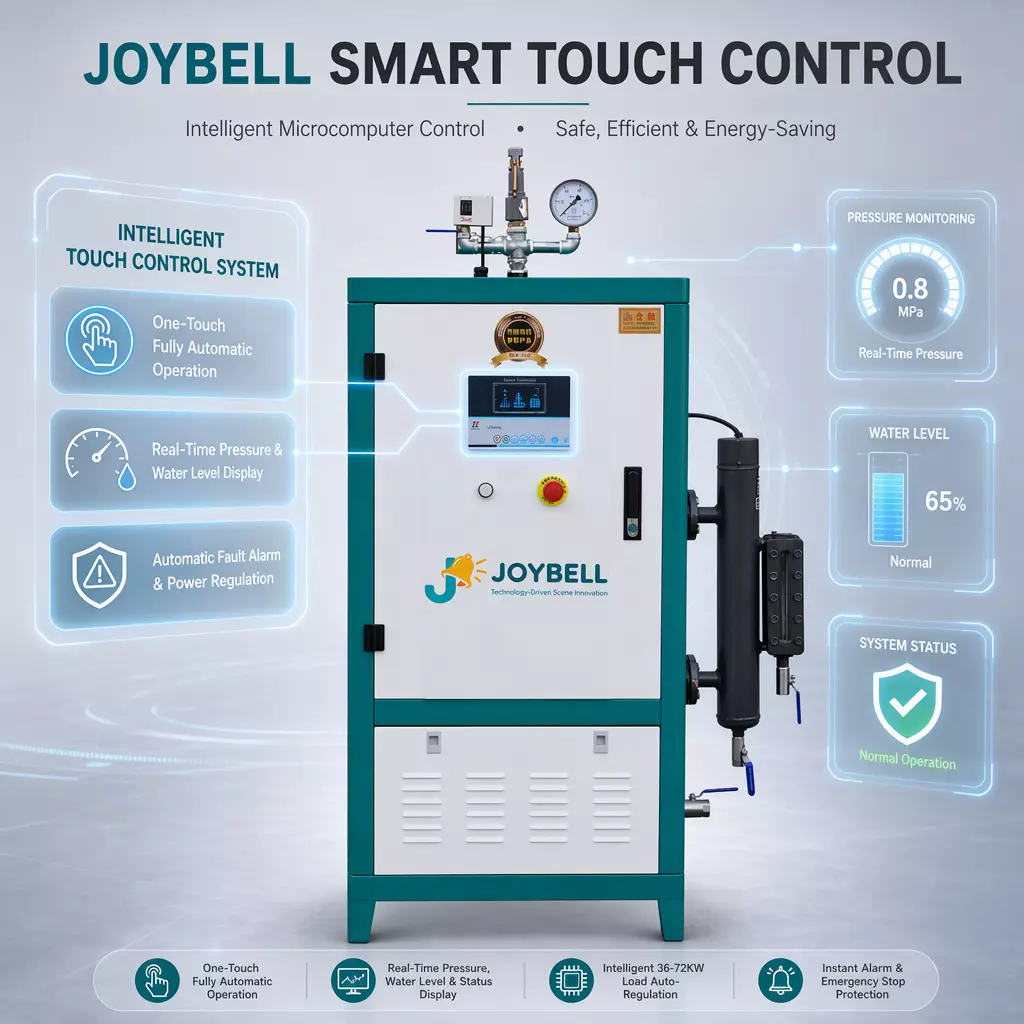
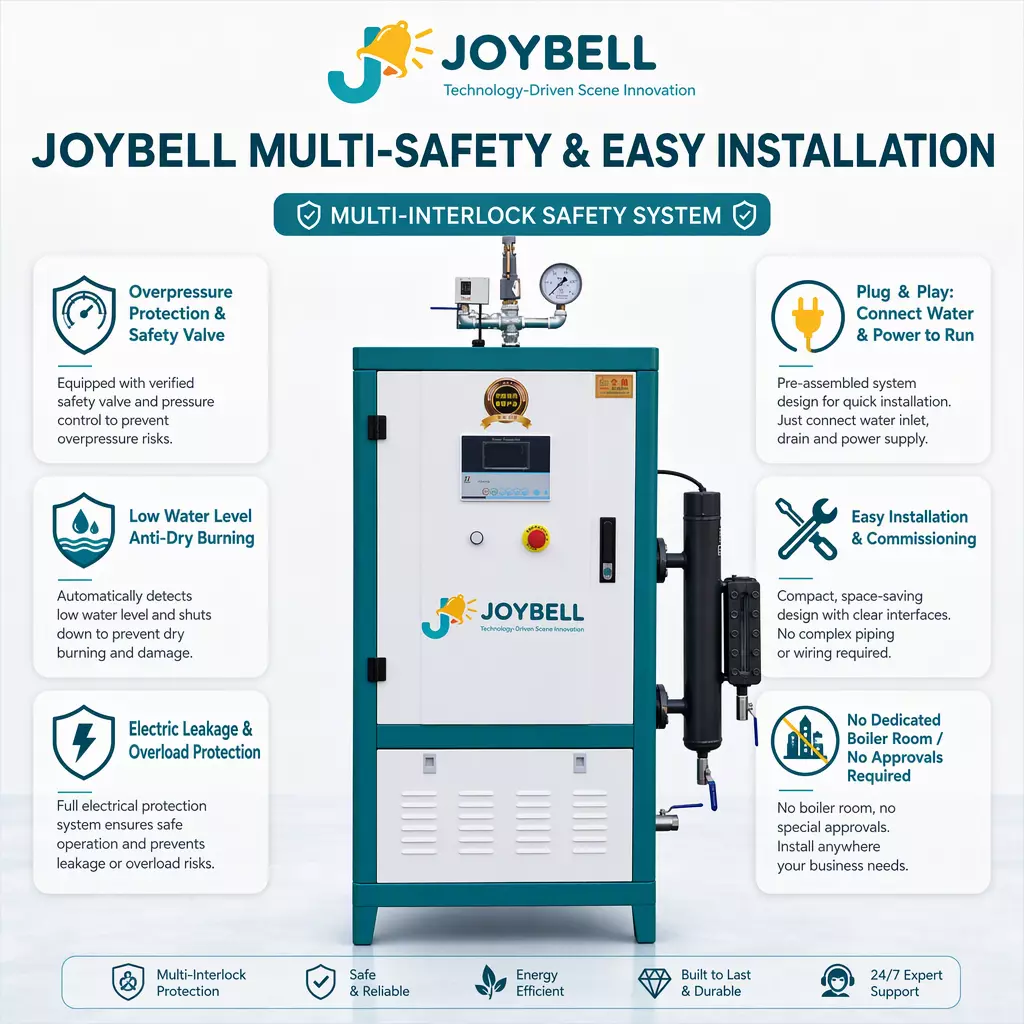
Three protections run in parallel rather than as one chain: a verified safety valve plus pressure controller cut the unit off on overpressure; a low-water interlock stops heating before the element can be damaged by dry burning; and leakage and overload protection trip the circuit on any electrical fault. On installation, the system is pre-assembled at the factory, so once the water inlet, drain and power supply are connected it is ready to run — no complex piping or wiring on site. And because this is an electric steam generator rather than a boiler, there is no dedicated boiler room to build and no special approvals to file: it can be installed wherever the steam is actually needed.
Five Industries, Five Different Steam Demands — One Sizing Question
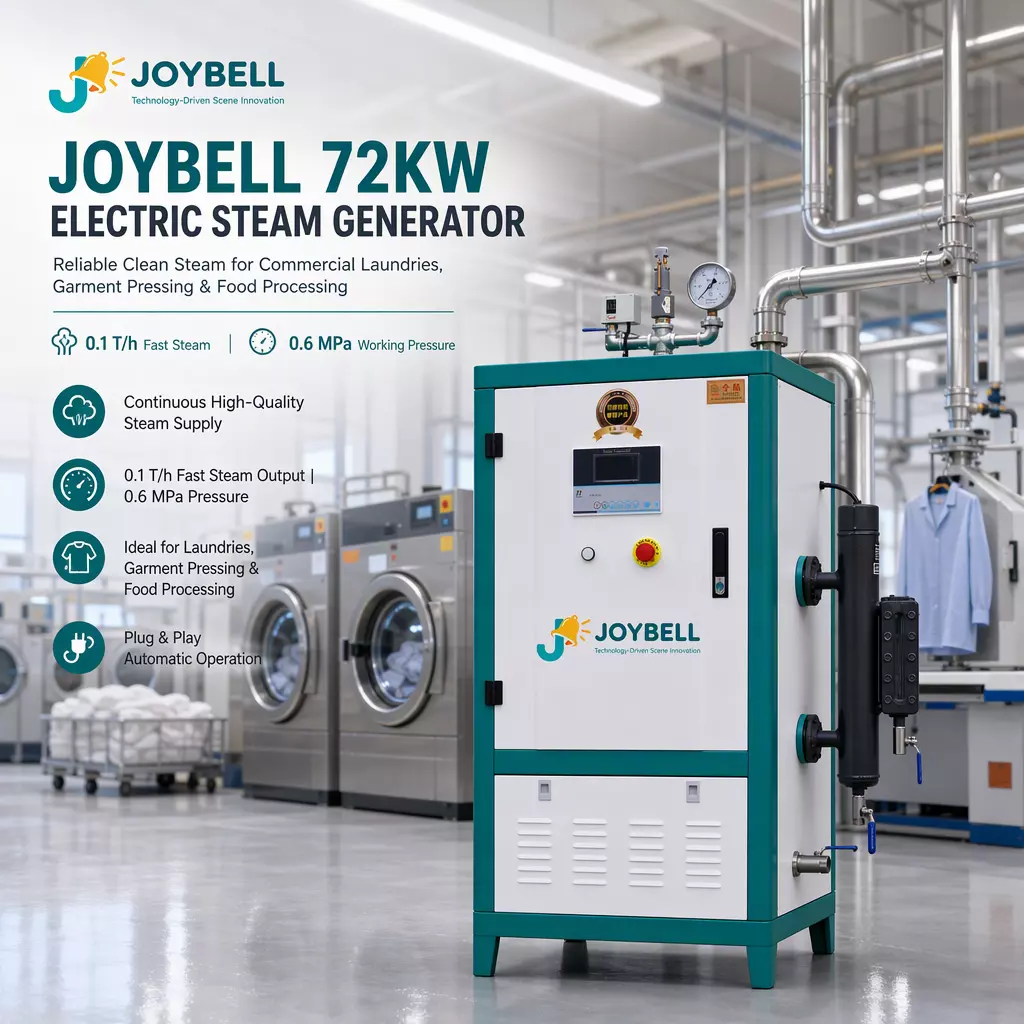
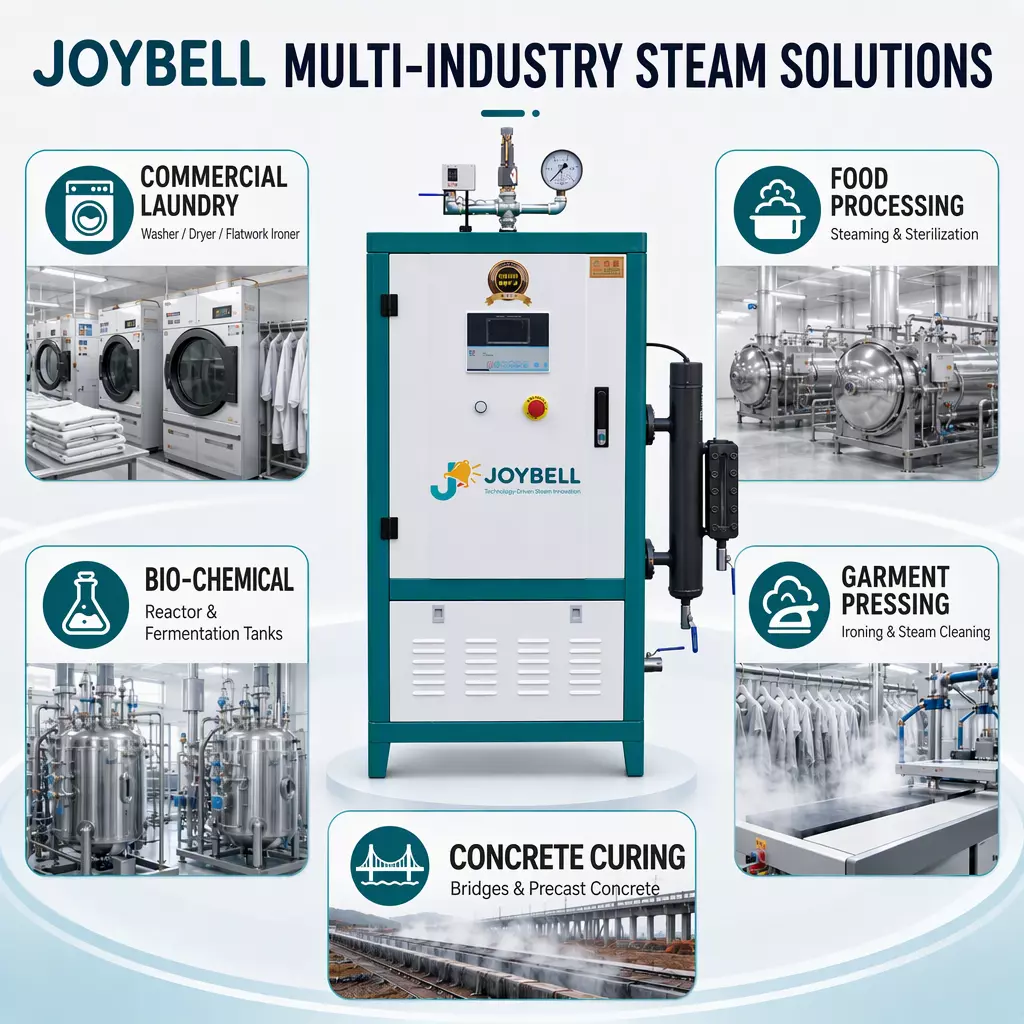
EN: The generator does not change between industries; the steam demand does. Commercial laundry runs continuous steam through washers, dryers and flatwork ironers across a shift, which is a load profile the 36-72 kW/h range handles well. Food processing needs clean saturated steam for steaming and sterilization, where the 164°C outlet and stable 0.6 MPa matter more than volume. Bio-chemical work feeds jacketed reactors and fermentation tanks, where a steady pressure set point matters most. Garment pressing and steam cleaning need steam available almost instantly, which is why the standby-on behaviour of an electric unit fits. Concrete curing for bridges and precast concrete needs low-pressure heat over long hours rather than high output. Tell us which of these is you, and we will confirm the sizing.
Check These Three Things Against Your Site Before You Order
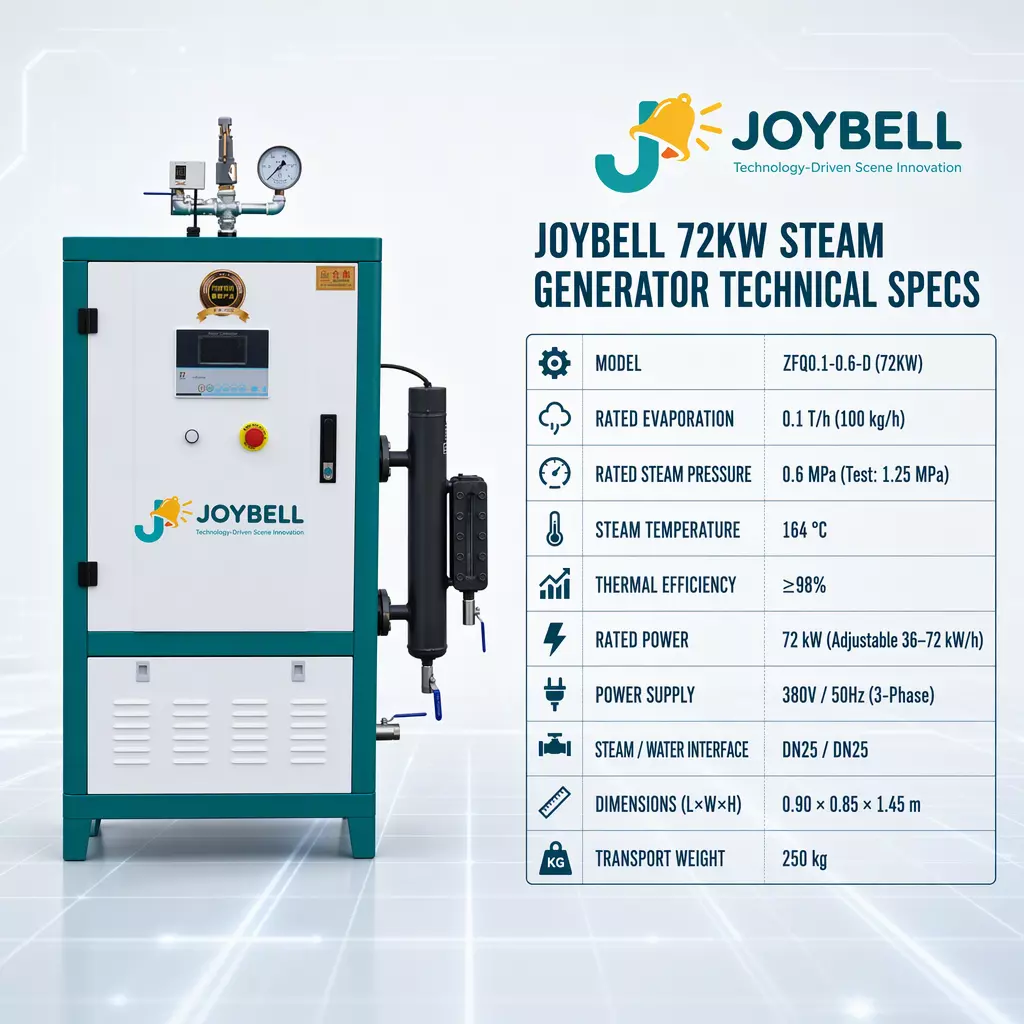
The full sheet is on the left of the image; before ordering, three lines decide whether the unit drops straight in. Supply: 380 V / 50 Hz three-phase, with a 35 mm² main cable and a 110 kVA matching transformer — confirm your incoming capacity. Connections: steam and water are both DN25, so existing pipework can usually be reused. Footprint and weight: 0.90 × 0.85 × 1.45 m at 250 kg, which is what decides whether it fits through your door and into the room you have in mind. Send us those three answers with the steam-consuming equipment you plan to run, and the configuration can be locked in.